One Operating Loop
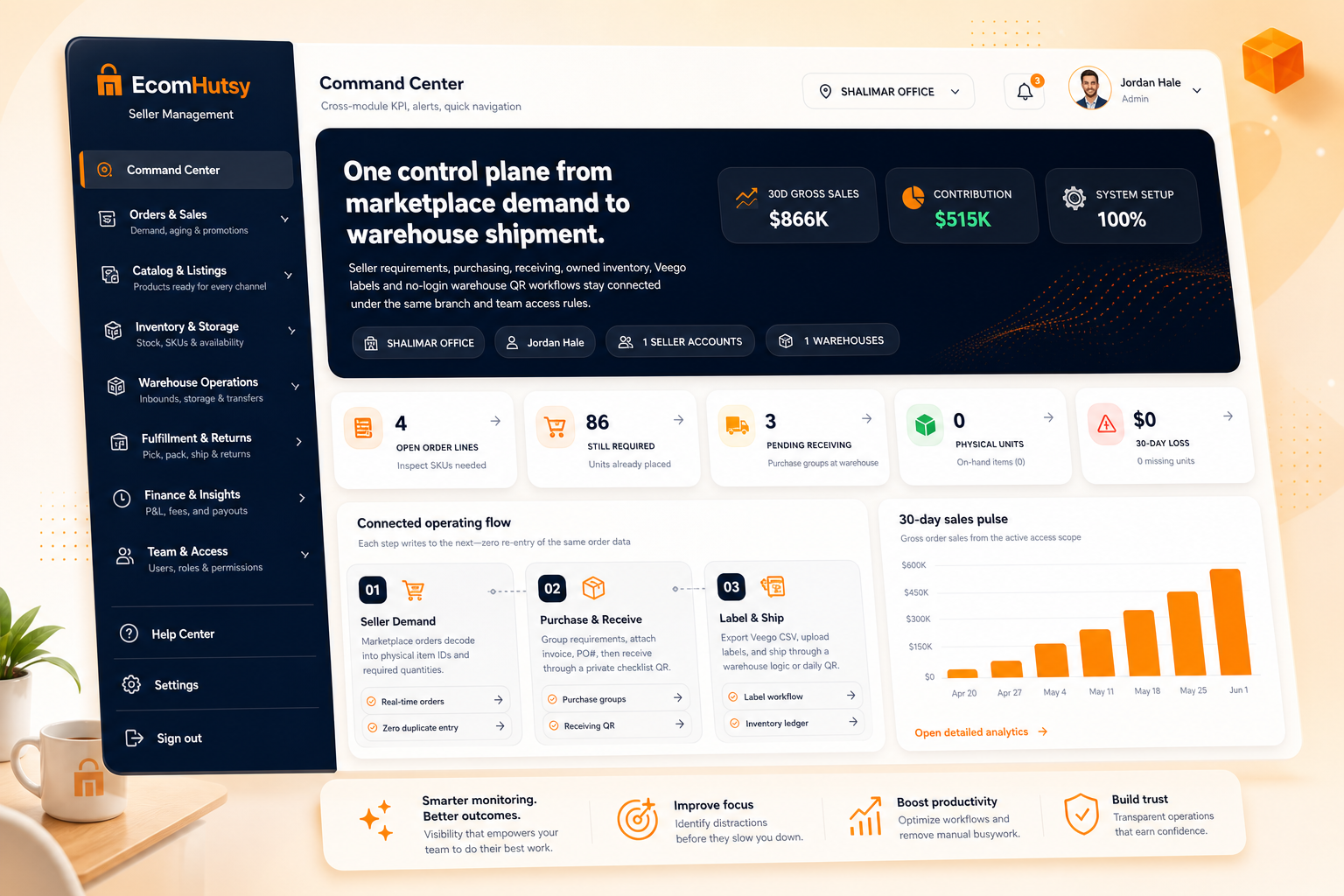
Orders, shortfall buying, receiving, inventory, and ship-out stay linked — so teams stop re-entering the same PO and SKU data across tabs.
TwoStep · Marketplace Operations
TwoStep — connect to fulfilled. Import marketplace orders, place supplier buys, receive into warehouse stock, and ship customers — one secure workspace per organization, scoped by branch and team.
50+
Live capabilities
5
Lifecycle steps
99.9%
System uptime
24/7
Ops visibility
Why it matters
Seller Management is powered by TwoStep — an organization-isolated FBM operations OS that keeps marketplace demand, supplier buying, warehouse receiving, fulfillment, and Profit Truth in one connected loop instead of five disconnected tools.
Orders, shortfall buying, receiving, inventory, and ship-out stay linked — so teams stop re-entering the same PO and SKU data across tabs.
Shortfall equals open customer demand minus warehouse stock. Buyers purchase what is actually missing, with proof that feeds receiving and profit.
Multi-warehouse stock, receiving QR checklists, loss logging, and Veeqo / marketplace label workflows keep physical units accountable through ship-out.
Branch, team, and role access plus an end-to-end cost trail from sale to buy to label to contribution — with warnings when proof is missing.
Key Benefits
Built for multichannel e-commerce operators who need Command Center clarity from marketplace demand through warehouse shipment — not another listing-only dashboard.
See open order lines, units still required, pending receiving, physical stock, ship-by risk, and 30-day loss in one daily cockpit.
Connect selling and buying accounts with Amazon OAuth, Temu/Walmart imports, Gmail purchase confirmations, and integration health checks.
Move from need → place buy → purchase history → receiving handoff with costs, refs, and PDF proof attached.
Confirm receipts, log pickup/manual arrivals, track on-hand/reserved/available, and capture loss when quantities come up short.
Run unshipped queues, export labels, fulfill from warehouse stock, and keep an audit trail of reserved quantity and movements.
Review gross sales, contribution, spend slices, and a sale-to-profit trail that flags incomplete cost data before decisions go wrong.
Product Core
Link selling/buying accounts, Amazon OAuth, Temu/Walmart report imports, and Gmail purchase-mail connect with integration health.
See open demand versus warehouse stock and buy only what is still required — per SKU and item ID.
Place supplier buys, capture costs and payment refs, attach PDF proof, and hand off cleanly to receiving.
Confirm receipts, log pickup/manual arrivals, capture shortfalls as loss, and keep multi-warehouse stock honest.
Track on-hand, reserved, and available units with movement history across branches and warehouses.
Run unshipped queues, export Veeqo CSV / marketplace labels, and ship with stock decrement and audit trail.
Maintain SKU master data, hunting research, and channel mapping so ops teams stop pasting IDs across tools.
Daily KPIs, operations inbox exceptions, exports, audit logs, and Profit Truth contribution visibility.
FAQ
Marketplace orders, supplier buying, warehouse receiving, inventory, fulfillment, catalog/SKU mapping, team roles, and reporting in one secure organization workspace.
Amazon via OAuth; Temu and Walmart via manual report uploads; buying accounts can connect Gmail for purchase confirmations. Product surfaces also cover related selling/buying flows across major marketplaces.
Yes. Role-based and module-level controls with branch/team scope mean operators only see what they own, and the audit log tracks changes.
Procurement is Step 1 (supplier purchase + proof). Receiving is Step 2 (physical confirmation into stock). Shortfall buying and warehouse stock stay linked in one lifecycle so finance and floor ops remain clean.
Ready to grow?
Continue to purchase, or talk with our team about configuring this module for your operation.